Private Osteoporosis Screening in London
Detect osteoporosis early with expert Bone Health Assessments
Osteoporosis often develops without symptoms until a fracture occurs.
Our private osteoporosis screening service uses DEXA bone density scanning, the gold standard for measuring bone mineral density, helping identify osteoporosis and osteopenia before fractures happen.
With fast appointments, consultant-led reporting and Central London clinics, we help you understand your bone health and support early intervention where appropriate.
Osteoporosis Screening – DEXA Bone Density Scan – Bone Health Assessment £115
What is osteoporosis?
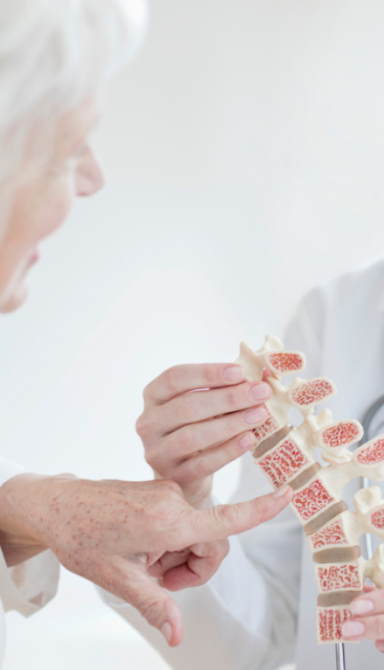
Osteoporosis is a condition that causes bones to become weaker and more fragile.
As bone density reduces, the risk of fractures increases, even after minor falls or everyday activities.
Because osteoporosis often develops without obvious symptoms, many people only discover they have the condition after experiencing a fracture.
Early osteoporosis screening allows reduced bone density to be identified before fractures occur.
Bone Health Assessments are commonly recommended for:
Symptoms you shouldn’t ignore
Loss of height
Back pain
Stooped posture
Fragility fractures
Reduced mobility
Broken bones after minor falls
*Report turnaround times are based on working days (Mon-Fri) and may vary depending on scan type and clinical requirements.
Important: The symptoms and risk factors shown on this page are not exhaustive. All imaging and assessments are subject to clinical suitability, referral acceptance criteria and justification where applicable.
Monitoring your bone health
A Bone Health Assessment isn’t only used to diagnose osteoporosis.
It can also:
Repeat assessments are often recommended to monitor changes over time. Your clinician will advise the most appropriate interval for your individual circumstances.
Understanding your results
Normal bone density
Your bone density is within the expected range for your age and sex. Your report may still include advice on maintaining good bone health.
Osteopenia
Your bone density is lower than expected but not low enough to be classified as osteoporosis. Your clinician may recommend lifestyle changes, monitoring or further assessment.
Osteoporosis
Your bone density is within the osteoporosis range, meaning your bones may be more fragile and your fracture risk may be increased. Your clinician can discuss treatment and next steps.

Women’s Bone Health
Bone density can reduce more quickly after menopause. Learn when a DEXA scan may be appropriate.

Body Composition
Coming soon-Measure body fat, lean muscle mass and fat distribution using DEXA technology.

Bone Health Assessment
Assess your bone strength, fracture risk and overall bone health with a comprehensive DEXA assessment.

Why choose Oryon?
Concerned about osteoporosis?
Book your private osteoporosis screening today.
FAQs about DEXA scans for Osteoporosis
A DEXA scan (Dual-Energy X-ray Absorptiometry) is a quick, low-dose imaging test used to measure bone mineral density.
Often referred to as a bone density scan, it helps assess bone strength and identify early signs of bone loss, including osteopenia or osteoporosis. DEXA scans are widely used because they are accurate, fast, and involve very low levels of radiation.
A Bone Health Assessment is a comprehensive evaluation of your bone strength and fracture risk. Using a DEXA (Dual-Energy X-ray Absorptiometry) scan—the gold standard for measuring bone mineral density—it can help identify osteoporosis, osteopenia and other changes in bone health before symptoms or fractures occur.
At Oryon, our Bone Health Assessment combines advanced DEXA imaging with consultant-led reporting to provide clear, clinically relevant information about your bone health. The assessment may also include additional specialist examinations, where appropriate, to support diagnosis and ongoing management.
Whether you’ve been referred by your GP or consultant, meet the criteria for self-referral, or simply want reassurance about your bone health, a Bone Health Assessment can help you make informed decisions about your long-term wellbeing.
During a DEXA scan, we typically assess:
The hips
The lower spine
These areas are most commonly affected by bone density changes and provide a reliable indication of overall bone health.
Results are compared against established reference values and reviewed by experienced clinicians, helping guide next steps where needed.
From the moment you arrive, our friendly, experienced team will guide you through each step of your appointment.
The scan itself is painless and usually takes 10–15 minutes. You’ll remain fully clothed and lie comfortably on the scanner table while images are taken.
If you have any questions or concerns, our team is always on hand to help you feel informed and at ease.
Osteoporosis screening assesses bone strength and fracture risk using a DEXA bone density scan. It helps identify osteoporosis and osteopenia before fractures occur, allowing treatment and lifestyle changes to begin earlier where appropriate.
A bone density scan is the DEXA test itself. Osteoporosis screening refers to the overall assessment, including your scan, consultant reporting and interpretation of your results.
Osteoporosis screening may be appropriate for women after menopause, adults over 50, people with previous low-impact fractures, long-term steroid users, those with a family history of osteoporosis and others with recognised risk factors.
Osteoporosis often develops without symptoms. Some people first notice loss of height, persistent back pain, a stooped posture or experience a fracture after a minor fall.
No. A DEXA bone density scan is painless, non-invasive and usually takes only a few minutes.
The scan itself is quick, although your appointment time will include preparation and positioning.
Your report will explain the findings, and your GP or referring clinician can discuss appropriate treatment, lifestyle advice or further investigations where required.
Although not all bone loss can be prevented, maintaining a healthy lifestyle, ensuring adequate calcium and vitamin D intake, regular weight-bearing exercise and identifying osteoporosis early can all help reduce fracture risk.
In many cases, yes. If you meet the eligibility criteria for self-referral, you may be able to book a Bone Health Assessment without first seeing your GP. If a referral is required, our Fast-Track Referral Service can arrange a consultation with an appropriate clinician.
Our DEXA scan London cost is clearly displayed before booking, with pricing starting from £115.
A DEXA scan is low risk but any concerns you have can be explained to you on the day by a clinician.
The scan itself typically takes 10–15 minutes.
Our clinics are based in the Harley Street district of central London, making access to your bone density scan London appointment straightforward and convenient.
DEXA (Dual-Energy X-ray Absorptiometry) is recognised as the gold standard for measuring bone mineral density. It provides highly accurate, low-dose imaging that can detect osteoporosis and osteopenia before symptoms develop, helping clinicians assess fracture risk and guide treatment decisions.
If your Bone Health Assessment identifies osteoporosis, your consultant or GP will discuss the most appropriate next steps. This may include lifestyle advice, calcium and vitamin D recommendations, further investigations or medication to help strengthen your bones and reduce your risk of fractures. Detecting osteoporosis early allows treatment to begin before a fracture occurs.
Osteopenia means your bone density is lower than normal but not low enough to be classified as osteoporosis. Osteoporosis is a more advanced loss of bone density that significantly increases the risk of fractures. A DEXA bone density scan can accurately identify whether your bone density is normal, reduced (osteopenia) or within the osteoporosis range.
Yes. Although osteoporosis is more common in women, particularly after menopause, men can also develop the condition. Bone density assessments may be recommended for men over 50, those with certain medical conditions, long-term steroid use or other risk factors affecting bone health.
Body composition assessments use the same DEXA technology to measure body fat, lean muscle mass and fat distribution. These assessments are available for specific clinically justified indications and approved referral pathways. Our team can advise whether this assessment is appropriate for you.
A bone density scan may be recommended if you:
Want reassurance about your bone health following discussion with a healthcare professional
Are aged 50 or over
Have gone through menopause
Have experienced a low-impact fracture
Have a family history of osteoporosis
Take long-term steroid medication
Have a medical condition that affects bone health
Have been referred by your GP or consultant
Yes, where clinically appropriate. Body composition assessments use DEXA technology to measure body fat, lean muscle mass and fat distribution. These assessments are suitable for specific medical pathways and other approved indications. Our team will be happy to discuss whether this assessment is appropriate for you.
Your Bone Health Assessment report is reviewed by an experienced consultant and includes:
- Your bone mineral density measurements
- An assessment for osteoporosis or osteopenia
- Information about your fracture risk where appropriate
- Clear explanations of your results
- Recommendations for any appropriate follow-up or discussion with your referring clinician
Your report is designed to provide both you and your healthcare professional with clear, clinically relevant information to support decisions about your ongoing bone health.
Have a question or need to learn more?
Where to find us
We have three locations in the heart of London